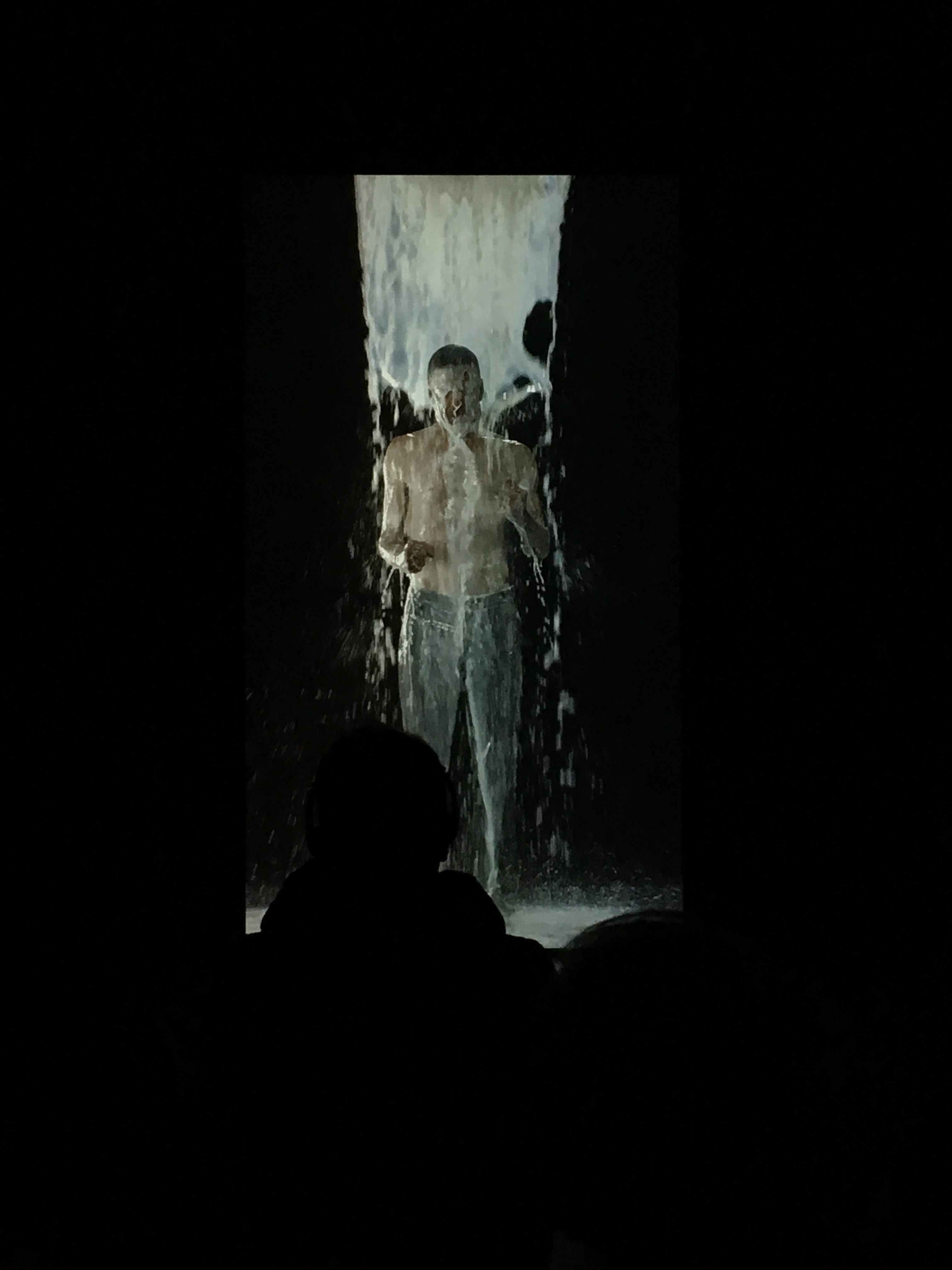
On March 16th, 2017, I went to the Bill Viola Electronic Renaissance exhibition at Palazzo Strozzi. Viola is known for his contemporary video art and his work immerses the viewers into space, image, and sound. Through his videos, Viola creates a dialogue between the classic and the contemporary by comparing his work and Renaissance artists.
Bill Viola was born in New York in 1951 and is now internationally recognized as one of the most celebrated contemporary artists. People, their figures and faces, are the main focus in his work as he explores spirituality and humanity.

Many of Viola’s work was shown next to a masterpiece made in the Renaissance. For example, La Visitazione (The Visitation), created by Pontormo Jacopo Carucci in 1528 was presented next to Viola’s, The Greeting. His video showed two women in a pleasant conversation and are interrupted by a third woman whom they greet warmly. The video is played in slow motion as we see the woman being introduced to one of the other in a sort of awkward first interaction. There was a slow voice that you could hear slightly in the background and it seemed that Viola was trying to bring Carucci’s painting to life.

A piece that stood out to me was Four Hands, a continuously running, black-and-white video polyptych. Each video shows a pair of hands, one belonging to a young boy, a woman, a middle-aged man, and the last an older woman. Each video portrayed the different stages of life and involved very slow deliberate movements. It reminded me of how we never really pay attention to what our hands do especially when we are nervous or anxious. The slow movements changed to different gestures and made you stop and notice small things about hands that we never really see, like how when you are young your hands are smooth and wrinkle free but this changes with age. Of all the things our bodies do, our hands do the most work.